Good Time Tips Is a growing network of reporters and contributors with access store, breaking celebrity news, history, lifestyle, fashion, pathetic stories and entertainment.
Looking up a synonym for persistence and found PERTINACITY. In essence holding true to a course of action. Life often brings us challenges that tempt us to give up on a goal, dream, or a habit. Interactions with leaders over the past 2.5 years I have heard the theme that leading during a pandemic is […]
Please, help me solve this problem that has torn apart and is threatening my happiness, my daughters and probably the future generations yet unborn.
I married my husband just like every other young woman and we both looked forward to a bliss full future with our children. To the glory of God, contrary to the belief of some people that I would have problems bearing children, I received God’s mercy and my three children came few years into our union.
A lot of people believed we would have to wait on the Lord for the blessing of the fruit of the womb as that was the tradition in my husband’s family, but God singled us out with mercy and we had our children without any hitch.
With these, our joy was complete and we never envisaged that these children would be a source of discord in our family in the future.
I am a trained nurse with a B Sc in nursing from Glasgow Scotland, my husband also trained as a professional engineer. We both had good jobs until my husband lost his job and getting another good well paid job became difficult, we both decided that I should travel out of the country to practise and when I am stabilised, he would join me with the children.
As luck would have it, I secured a good job and no sooner had I got to England than my husband secured a good job too. We had it all, which was what we thought. I would have returned immediately, but since my been over there made it convenient for my family to visit on holidays and my children were not too young, I faced my job and sincerely my husband did a good job taking care of the children.
The summer my first daughter turned 18, it was my turn to visit home. When I arrived, I noticed a tensed atmosphere between my daughters and their father. I forgot to mention the fact that I am blessed with three children, two girls and a boy, the boy is the last.
Initially, I thought it was the adolescence – parent’s issue, so I ignored it. But when I noticed that apart from the tensed atmosphere, my first daughter sometimes would be outrightly rude to her father, I demanded to know what was going on. This became a matter of concern because, both of them were very close and my husband addresses her as Iya Mi (My mother) because of the uncanny resemblance she has with my mother-in-law, so I wondered what could have happened.
I tried several times to get my daughters to speak with me and tell me why they treat their father with such impunity, but all they had to say was always talk to your husband. On a faithful day, I had to call my husband’s attention to what I saw and asked him what was going on. He told me it was nothing he couldn’t handle and that I shouldn’t worry myself. According to him, my eldest daughter was keeping bad company in school and she was trying to draw her younger sister into it.
Because of this, he decided to bench them, as he disallowed them from going out and attending parties. He drops them in school and created time to pick them from school. On days that he had to travel, he made plans to get them home. This of course did not go down well with them and he wasn’t ready to bend the rules for now.
I was happy because I knew it was a positive development and because of their age I know this wouldn’t go down well with them. I then ignored their attitude until few days that I wanted to travel back to the UK. I called my eldest daughter first to speak with her. When I raised my observations and my husband’s response with her, her reply threw me off balance.
My daughter told me that daddy does not want her sister and herself to go out because he is having sex with both of them. I thought I didn’t hear her well.
I ask her to repeat what she said, she repeated herself again and asked me to confirm from her sister.
I summoned my younger daughter immediately and she said the same thing. My life crashed that very moment and in asked if they could repeat what they told me before their father. They said they would. When my husband came back from the office, I sought an audience with him and told him what the girls said. He said I was joking and said I should call the girls. I did and they repeated what they told me.
My husband denied vehemently and the girls insisted that it was happening. I was confused and I sought the counsel of our pastor, he called my daughters and they said the same thing. I was confused and I didn’t know who to believe. This shattered my world and my husband became something else. He was hurt that I of all people refused to believe him.
I made arrangement and took my children back to the UK with me. Although it cost me a lot moneywise, but I couldn’t leave my children with him any longer, a lot of things changed for him. He lost all his friends and even some of his family members abandoned him. People alluded a lot of reasons why he would sleep with his daughters. Some said he did it for spiritual purpose. Some said he was using them for money ritual and I also had a reason to think that his fortune changed just after I left, automatically, he must have used my girls.
I didn’t want to have anything to do with him. He tried to make me see that it was the devils machination to destroy our family but I was past caring. I raised my children alone, although he offered to help several times, but I didn’t want to have anything to do with him. I learnt later that he remarried years after we left him. He became ill with psychiatry problem and he had to be remanded in a home.
My son cared about him and he was always communicating with him. As soon as he finished his education, he came back to Nigeria to stay close to his father and it was through him that we learnt of all that was happening to him.
My problems started when it was time for my daughters to get married and they couldn’t find suitors. It wasn’t even an issue of having relationships and experiencing disappointments. They never had dated. Initially, I didn’t see the situation as a problem because I felt they were experiencing psychological problems as a result of what happened during their teenage years.
They went through different counseling and other therapies but it didn’t help. One of my friends suggested that we seek spiritual help when my first daughter turned 36 years. We sought spiritual assistance from our pastor in London, a white man after prayers he said my daughters were suffering from a curse and they needed deliverance. Probably because he was not explicit, we went through several deliverance sessions, but the situation didn’t change.
My elder sister asked us to come back home. After visiting several pastors, we went to see one of the popular Pentecostal pastors in the country. After prayers, he asked my daughters to confess their sins so that they can be free of the curse they placed on themselves. They denied knowledge of what the pastor said.
We left but their situation remained the same. Another friend of mine took us to another church, this time a spiritual church. After prayers, the spiritual head told my daughters that they had destroyed someone’s marital bliss and someone who wasn’t supposed to cry over them shed bitter tears because of what they did. He told us that the only way out is for them to seek the person out, confess their sins and ask for forgiveness.
My eldest sister started to deny again but her sister busted into tears and said she would confess. She said they both lied that their father did not have sex with them. She said her sister asked her to collaborate her story years back because their father does not give them the freedom to do what they wanted.
I was devastated by their confession. The man of God asked them to confess and let everyone who heard what they accused their father of know that they lied. Some of these people are dead. Apart from this, their father is mentally ill and can no identify with his environment. Would he be able to understand and forgive them? I am yet to come to terms with why they destroyed all of us. Right now I have suffered a partial stroke because I still cannot fathom why.
Please ease, where do we start from? My life is full of regrets. Probably, I should have trusted my husband, but as at that time, I couldn’t have done otherwise. Please, help me.
Why Famous: Often referred to as the father of the nation by South Africans, Nelson Mandela was an anti-apartheid activist and politician who served 27 years in prison. After being freed in 1990 he became the President of the African National Congress (1991-97) before being elected the first black President of his country in a fully multiracial election in 1994.
For his activism, he received over 250 honours, including the 1993 Nobel Peace Prize, the US Presidential Medal of Freedom and the Soviet Order of Lenin.
Born: July 18, 1918 Birthplace: Mvezo, Umtatu, South Africa
1990-02-02 South African President F. W. de Klerk promises to free Nelson Mandela & legalizes ANC & 60 other political organisations
1990-02-10 South African President F. W. de Klerk announces Nelson Mandela will be freed on Feburary 11th
1990-02-11 Nelson Mandela released after 27 years imprisonment in South Africa
1990-06-05 South African troops plunder Nelson Mandela’s home
1990-06-20 Nelson Mandela lands in NYC to begin a tour of US
1990-06-22 Nelson Mandela addresses the United Nations Special Committee against Apartheid in New York, saying that nothing has occurred in South Africa to reverse the ANC’s position
1990-06-23 African National Congress leader Nelson Mandela, on a US tour, receives a tumultuous welcome in Boston
1990-06-25 African National Congress leader Nelson Mandela meets with President George H. W. Bush at the White House
1990-08-16 South African President F. W. de Klerk and Nelson Mandela hold emergency talks in Pretoria about increasing violence in Soweto
1990-12-13 South African President F. W. de Klerk meets with Nelson Mandela to talk of end of apartheid
1991-01-29 Nelson Mandela and Mangosuthu Buthelezi meet after 28 years
1991-06-26 ANC leader Nelson Mandela addresses congress
1991-09-05 Nelson Mandela chosen as president of African National Congress
1992-06-30 South African ANC President Nelson Mandela meets with UN Secretary-General Boutros Boutros-Ghali at Dakar
1992-07-27 Nelson Mandela says a general strike will go ahead to protest for the removal of South African President F. W. de Klerk from power and for free elections
1993-10-15 Nelson Mandela and South African President F. W. de Klerk awarded the Nobel Peace Prize
1994-03-07 ANC chief Nelson Mandela rejects demand by white right-wingers for separate homeland in South Africa
1994-05-06 Nelson Mandela and the ANC, finally confirmed winners in South Africa’s first post apartheid election
1994-05-10 Nelson Mandela sworn in as South Africa’s 1st black president
1994-10-01 South African President Nelson Mandela visits US
1996-07-07 Nelson Mandela steps down as President of South Africa
1998-07-12 South African President Nelson Mandela accompanies Queen Elizabeth II on a coach drive through the streets of London
1998-08-11 Palestine Liberation Organisation and Palestinian National Authority president, Yasser Arafat, arrives in Cape Town on his first state visit to South Africa at the invitation of President Nelson Mandela
2004-07-17 Former South African President Nelson Mandela calls for commitment by the world to take action against AIDS
2018-07-17Barack Obama gives speech honoring Nelson Mandela and warning of “strongman politics” in Johannesburg, South Africa
Quotes by Nelson Mandela
“Education is the most powerful weapon which you can use to change the world.”
In 1911, a deadly epidemic spread through China and threatened to become a pandemic. Its origins appeared to be related to the trade in wild animals, but at the time no one was sure.
Lockdowns, quarantine measures, the wearing of masks, travel restrictions, the mass cremation of victims, and border controls were deployed to try to lower the infection rate. Yet more than 60,000 people died in modern-day northeast China, making it one of the world’s largest epidemics at the time.
When the disease was eventually brought under control, the Chinese government convened the International Plague Conference in the northerncity of Shenyang — close to the epicenter of the outbreak.
In attendance were virologists, bacteriologists, epidemiologists and disease experts from many of the world’s major powers — the United States, Japan, Russia, the United Kingdom and France.
Illustration of the Reaper (allegory of Death) above Manchuria, which was published in Le Petit Journal, in France, in 1911
The purpose of the conference was to find the cause of the outbreak, learn which suppression techniques were most effective, discover why the disease had spread so far so fast, and assess what could be done to prevent a second wave. While the conference was not without some finger pointing,it was mostly a genuine attempt to learn.
As the world now faces a pandemic characterized by a lack of a globally co-ordinated response and multilateral effort on the part of political leaders, the collaborative aspects of the 1911 conference in north-eastern China are worth reconsidering.
Today, the World Health Organization (WHO) appears compromised, the virus has been racialized, major nations are angry with each other and competing for resources and control of the narrative, while poorer countries are left to fend largely for themselves.
Compared to 1911, we appear a polarized and divided world.
Marmots and plague
The Great Manchurian Plague that broke out across northeastern China in 1910 was devastating.
From the autumn of 1910, until the outbreak was finally suppressed the following year, an estimated 63,000 people died. The epidemic hit international headlines when it reached the northeastern city of Harbin, in today’s Heilongjiang province. Harbin was then part of what was known as Manchuria, a vast, agriculturally important but sparsely populated region situated on the juncture of the Chinese, Japanese and Russian spheres of influence. The majority of the territory was Chinese-governed, with Japan controlling the port area around Dalian and Russia running Manchuria’s railways.
Harbin was an international city, home to many Russians who worked for the China Eastern Railway (CER), which connected the Trans-Siberian Railway to the Japanese-controled port city of Dalian. The city was also home tolarge communities of Japanese, Americans and Europeans engaged in trades connected to the railway.
That included the fur trade, and it was from this industry that the disease most likely came.
Tarbagan marmot (Marmota sibirica), a species of rodent in the family Sciuridae, in steppes around Khukh Lake, Mongolia.
The Tarbagan marmot was a species of rodent that lived mostly on the grasslands and steppe of Mongolia and neighboring Manchuria. European, American and Japanese furriers had long purchased sable, mink and otter furs from local hunters, but had never been interested in the coarse fur of the Tarbagan marmot. But new dying techniques at the start of the century allowed marmot fur to pass as an affordable alternative for better-quality furs.
Thousands of nomadic local hunters were tasked by foreign buyers with bringing marmot hides, which soared in value in the years before the virus. Rural hunters had long avoided usingdiseased marmots for food, but did not think to cast asidethe hides of sick animals — especially not when they were worth so much.
Pinpointing the initial outbreak of the plague is hard, but it was first officially noted by Russian doctors in Manzhouli, an Inner Mongolian town on the Chinese-Russian border, which had grown up around the CER.The symptoms were alarming — fever followed by haemoptysis (the coughing up of blood). In Manzhouli, the dead were left in the street and railway freight cars wereturned into quarantine wards.
A picture of victims of the Great Manchurian Plague.
Just as viruses spread fast along airline routes today, back then the railways facilitated the spread. Fear in Manzhouli meant many people followed the routes the marmot hides had taken along the CER to the Heilongjiang city ofQiqihar, and then on to Harbin.
Cases of the pneumonic plague appeared in major rail termini — Tianjin, Beijing and along the Beijing to Wuhan railway. Even Shanghai, almost 2,000 miles from Manzhouli, reported a case and considered a lockdown of the city to prevent wider infection. In the crowded slums of Harbin, the disease took hold swiftly. By November 8, 1910, Harbin had a death toll of 5,272.
Initial response and debates
The response to the outbreak was rapid, given the logistical constraints at the start of the 20th century.
Quarantine centers were established, mostly in converted rail freight cars, for people the authorities thought had have come into contact with the disease — relatives of the dead plus those in the fur trapping and trading business.
If the quarantined didn’t show symptoms within five-to-10 days they were released with a wire wristband fastened with a lead seal stating they were plague free. But if symptoms did show, the entire freight car was essentially doomed, given the disease’s staggering near 100% mortality rate.Burials were forbidden; mass cremations were enforced.
In Harbin, the Chinese authorities’ lead doctor Wu Lien-teh, a Malaysia-born ethnic-Chinese medic educated at Cambridge University, was managing to contain the outbreak.
This photo taken sometime between 1910 and 1915 shows Dr. Wu Lien-teh, a Cambridge-educated Chinese physician who pioneered the use of masks during the Manchurian Plague of 1910-11.
Wu began post-mortem exams of victims and crucially established that the disease was pneumonic plague and not bubonic (the difference between the forms of plague is the location of infection; in pneumonic plague the infection is in the lungs, in bubonic plague, the lymph nodes). He also heavily recommended the wearing of face masks.
By early 1911, China had mobilized doctors and epidemiologists from across China to converge on Harbin. Wu knew there was a big deadline looming. Chinese New Year was officially January 30 and Wu knew that limiting travel would be almost impossible during the annual migration home for so many Chinese people.
If the infection rate wasn’t brought down, then it risked becoming a nationwide epidemic.
The response was sometimes harsh — any lodging house where an infection appeared was burnt to the ground. But overall Wu’s anti-plague measures worked. So-called “sanitary zones,” quarantines, lockdowns, isolation, travel restrictions and face masks were all implemented and appear to have brought the infection rate in Harbin down by the end of January.
Infections had spread, however, along the rail line. By the start of January 1911, Shenyang had over 2,571 deaths. Eventually, quarantining and travel restrictions in Shenyang began to take effect and the infection rate fell. But the rail line extended onwards and several towns close to the major port city of Dalian reported cases.
In Dalian itself, mass inspections of train and ship passengers were instituted, the line was then shut, and ferries from Dalian ordered to remain in port. This meant the plague never reached Dalian.
Though cases continued to pop up across Manchuria and occasionally beyond, in Harbin, Wu declared the plague suppressed at the end of January 1911, with a final mass cremation of victims.
It was time to convene an international conference to try to find out why the outbreak had been so severe and widespread — andwhich anti-plague measures had worked best.
A conference in Shenyang
Yale professor William C Summers notes in his 2012 study of the Great Manchurian Plague that: “By the end of January 1911, the momentum for some sort of international consortium of ‘experts’ to come together in China was building rapidly.”
The conference was not without risk for the Chinese.
China had a Russian-controlled rail line running through a vast swathe of its territory, Japan was ensconced in Dalian and controlling China’s major northern seaport, and the European powers and US had treaty ports up and down the country.
Kitajskaya street in Harbin circa 1932.
Still, they pushed ahead with hosting, which helped China avoid the charge of doing nothing in the aftermath of the epidemic. All attendees pledged that the conference was primarily concerned with scientific investigation, and not with imposing any further controls on China from outside.
By April 3, 1911, Shenyang’s Shao Ho Yien palace had been turned into a conference center that included meeting rooms, laboratories for experiments and living quarters for the delegates. As well as the principal countries mentioned, Italy, Mexico, the Netherlands, Germany and Austria-Hungary all sent experts. Many were from prestigious institutes.
The main body of the conference sought to deal with eliminating the bad science and gossip, and getting to the scientific root of the bacteria. It was high-level science for the day — bacterial toxins, surface agglutinins, variant strains. There was also discussion ofmodes of contagion such as coughing and false theories such as the passing of the bacillus on food. There evenwas talk of what we would now call asymptomatic patients and super-spreaders.
Containment was a major theme. What had worked best? Emergency quarantine and travel measures, certainly. Also, the early use of face masks which predated Wu’s discovery of the bacillus as pneumonic. Additionally, the rapid construction of plague hospitals to isolate the infected and potentially infected from ordinary hospital patients.
Harbin Railway Station, taken in about 1900
The conference wrapped on April 28, 1911, with closing remarks by Wu. Ultimately, China’s fears that Russia, Japan or the European powers would use the conference to advance their political aims against China didn’t materialize.
The conference’s conclusions and resolutions dealt with the science of the plague, the need for sanitary improvements, quarantine regulations and the unwitting cause of the epidemic, the Tarbagan marmot.
Closing the conference Dr Wu urged that: “Every effort should be made to secure effective medical education in China.”
Global responses
In 1911 there was no WHO.
The response to the epidemic, the job of trying to limit its spread and suppress it, was left to individual nations, often nations with political antagonisms.
There were no politicians in Shenyang, only scientists who saw the need for a global intergovernmental response — and a global health organization. That did begin to emerge after the First World War with the League of Nations formed in the wake of the 1919 Paris Peace Conference. The League took on matters relating to health through its Health Bureau, formed by an executive section of medical experts.
The bureau targeted the eradication of leprosy, malaria and yellow fever and successfully helped to contain epidemics of typhus in Russia and various outbreaks of cholera and typhoid in China between the wars. After World War II, the League’s successor, the United Nations, created the WHO.
The Great Manchurian Plague did not ultimately spread in any serious way to the rest of China, Mongolia or Russia. The shutdown of Dalian port stopped the spread out from Manchuria to major destinations in Japan, Korea, Hong Kong and elsewhere in Asia.
From there it could have moved by ocean liner to Europe, America and throughout the world. But it didn’t.
Summers, the historian, said that containment was down to a joined up response.
“Such a conjunction of the right knowledge, the right resources, and the right people has not always been the case in other global challenges of epidemic disease,” he said.
Measures taken today around the world — specially constructed quarantine hospitals, mask wearing ordinances, enhanced sanitary practices, travel restrictions, grounded planes and dedicated teams of healthcare workers — in many ways replicate those taken 110 years ago in northeastern China.
However, the major players today — the US, China, the nations of the European Union, and Japan — seemingly have little interest in a coordinated response to the health crisis and prospects of any apolitical conference seem remote.
In 1911, the world’s leading disease experts were eager to get to China.
Perhaps that is what needs to happen at some point after the coronavirus pandemic: the world’s scientists could circumvent the politicians to find a way to meet, share and discuss Covid-19 in an open forum.
It is eight years since William Price King joined Smorgasbord to share music across the genres. It is six years since we have featured some of the music legends and delighted to showcase them again in 2022. Welcome to a brand new series by William Price King.In the last few months we have featured some […]
Hi SEers! Denise here to talk about taking mini vacations away from writing. Sometimes, I draw a blank. Not necessarily writer’s block because the words are just within my grasp. Yet, I can’t put them all together when I sit down to write. This is when I step away from the computer, shut it off, […]



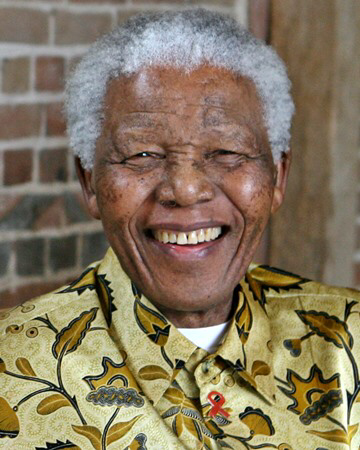
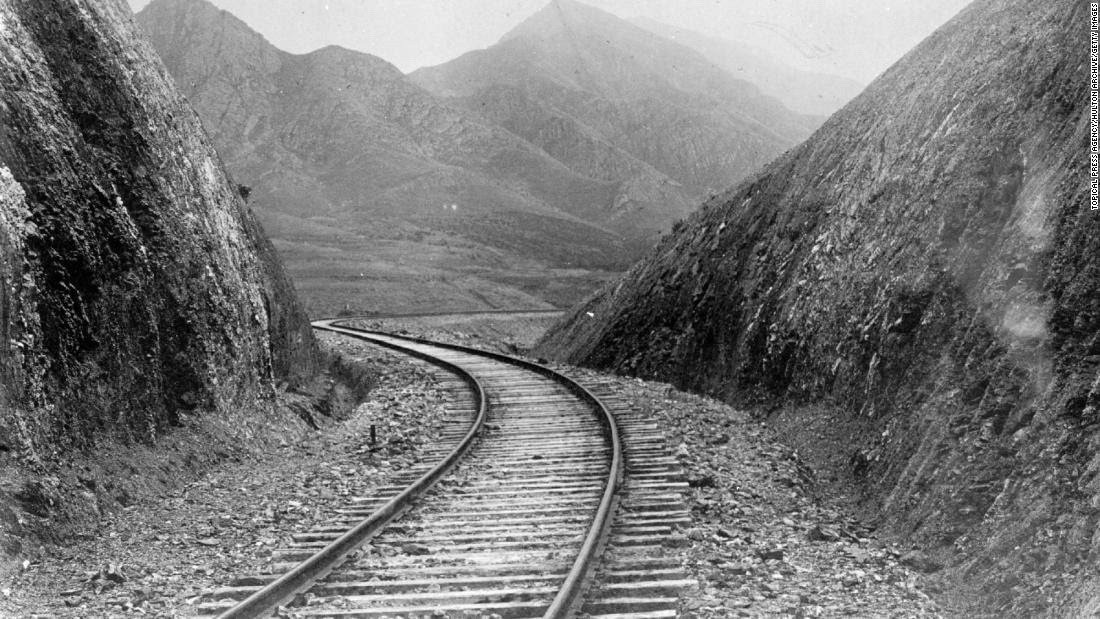
 Illustration of the Reaper (allegory of Death) above Manchuria, which was published in Le Petit Journal, in France, in 1911

 This photo taken sometime between 1910 and 1915 shows Dr. Wu Lien-teh, a Cambridge-educated Chinese physician who pioneered the use of masks during the Manchurian Plague of 1910-11.
 Kitajskaya street in Harbin circa 1932.
 Harbin Railway Station, taken in about 1900



 Good Time Tips